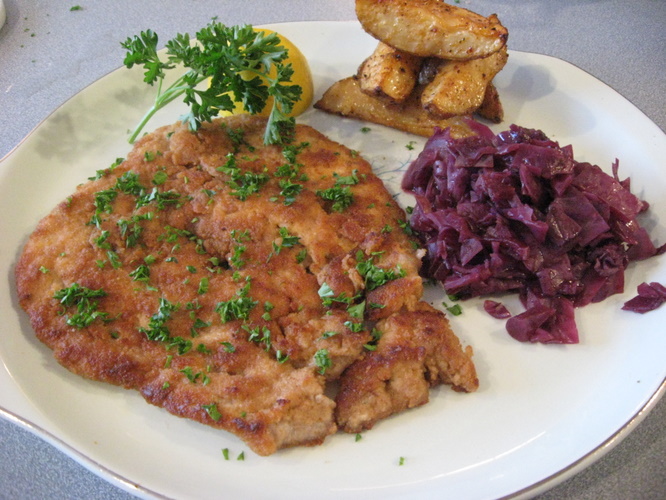
The schnitzel is a dish I make almost every week in one form or another. Jägerschnitzel, (Hunters-Schnitzel) especially, carries a kind of old‑world spirit with it. From forest roots to frying pans, from German grandmothers to American diners, it has traveled far without losing its soul.
Every version tells a story: a breadcrumb trail through history, technique, and memory. And even though our kitchens look different today, the spirit behind the dish — that cozy, woodsy, hearty “Jaeger” feeling — is still the same. In this first part, I want to look at where the dish comes from and how the technique shapes everything that follows.
Below, you’ll find the chapters for Part 1 — the story, the craft, and the essential methods that make a schnitzel come alive. Go right to history
The Forest to the Hunt to the Kitchen
Where Jägerschnitzel truly begins — in the deep German woods, in the rhythm of survival.
Before we sit down to eat this dish
Would you like to explore how we got here?
We Begin in the Forest
Jaegerschnitzel is not about the mushrooms uniquely
it's about hunting for something to feed the family
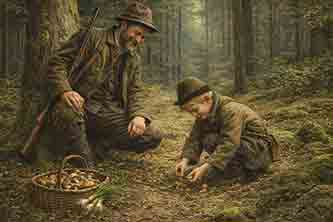
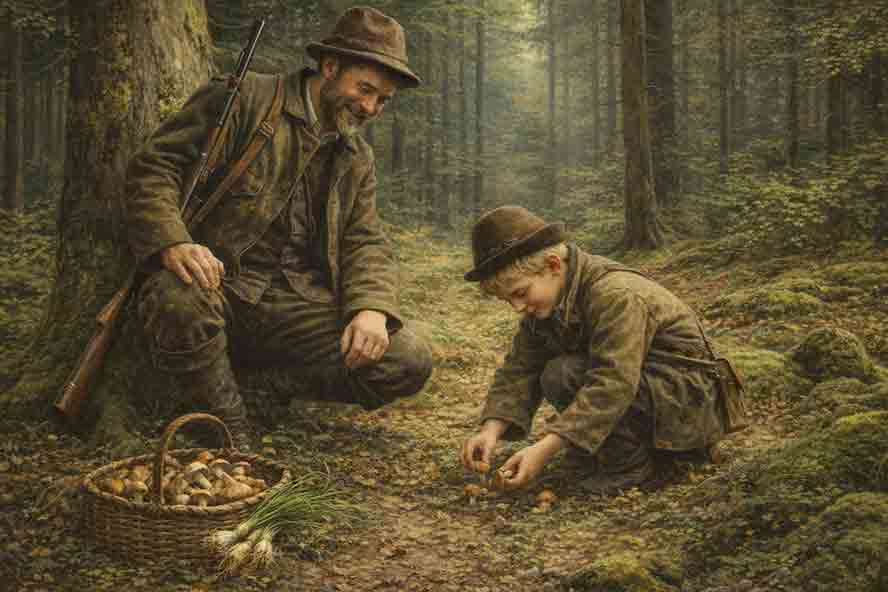
Jägerschnitzel begins in the forest. Not a modern trail, but the deep German woods of the 1800s — damp earth under boots, pine resin on the air, mushrooms hiding beneath fallen leaves.
A hunter walks home through the quiet, carrying the smells of the forest in his coat.”
Gathering what could be used for the daily meal
“Back then, hunting wasn’t sport. It was survival.
Families depended on whatever the woods offered — a bit of game,
a handful of mushrooms, onions from the cellar,
broth simmering on the hearth.
From those simple ingredients came the first hunter’s schnitzel.”
To the Kitchen
Where the German Ingenuity begins
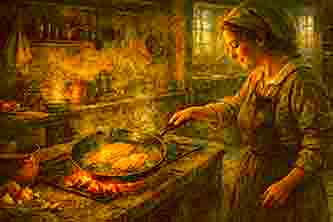
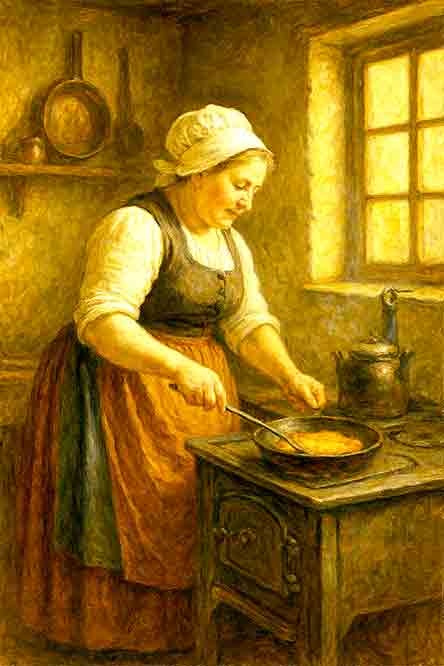
And once the hunt came home — whether it was mushrooms from the forest floor or a modest cut of meat from the butcher — the real transformation happened at the stove.
This was where German Ingenuity took over, turning simple ingredients into something greater through technique that turned out to be incredible
without extravagace.
In those old kitchens, the magic wasn’t in rare spices or fancy tools,
but in the way a cook understood heat, fat, and timing.
A schnitzel wasn’t merely fried; it was guided, coaxed,
encouraged —
on a hot wood fired stove, where you
had to be crafty to control the temperature.
Out of these challenges came something elevated
From just meat dipped in crumbs. and fried.....
German Ingenuity at the Stove
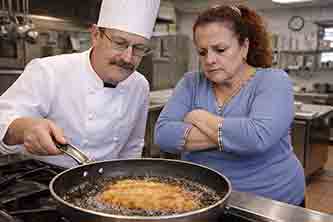
Im Fett Schwimmen — Letting the Schnitzel Swim
“In the old kitchens, schnitzel never sizzled in a thin film of fat — it swam.”
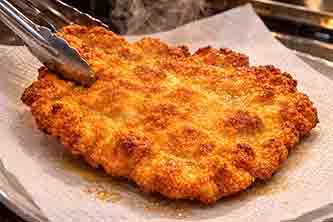
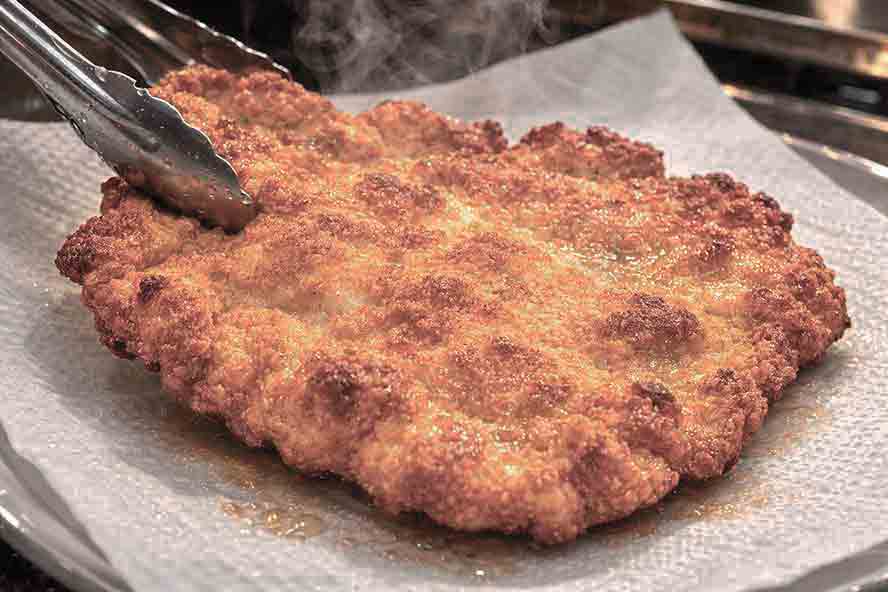
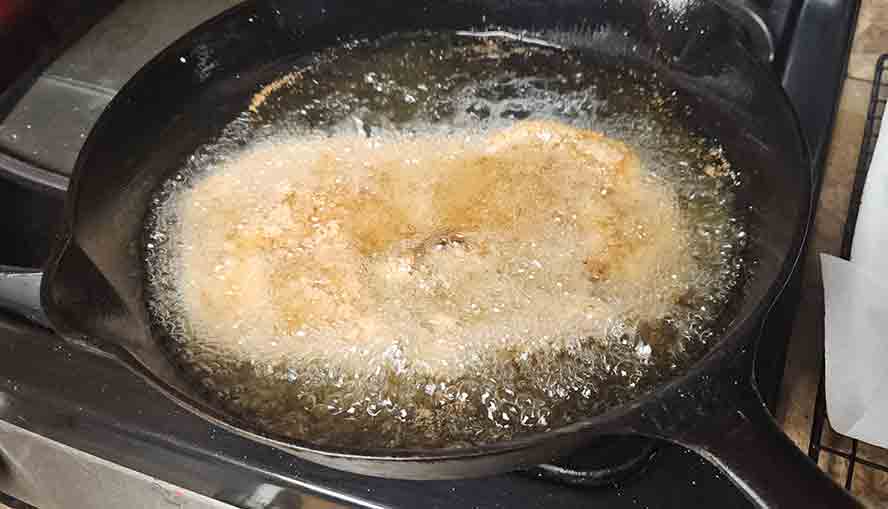
German cooks called it im Fett schwimmend ausbacken, a method born from wood‑fired stoves and uneven heat. A shallow pool of hot fat let the cutlet float just enough to move freely, preventing sticking or scorching from direct pan heat, and this method born of practicality created
this beautiful, artistic
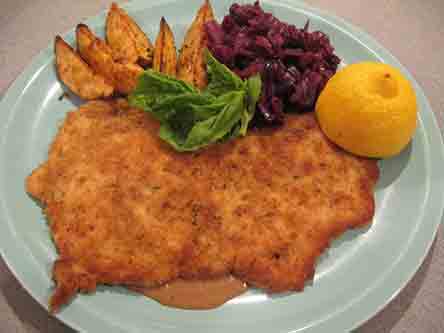
rippled, blistered crust.
Also the cook would tilt the pan or give it a gentle shake, sending waves of hot fat washing over the top which creates an effect we will describe more below.
It wasn’t extravagance, but it created a culinary delight much better than just fried breaded meat.
The Soufflé Effect
How the Crust Puffs and Blisters
What makes a schnitzel look alive — the bubbles, the waves, the airy lift — is something cooks today call the soufflé effect. When the cutlet hits the hot fat, steam trapped between the meat and the breadcrumb coating tries to escape.
If the coating is loose, well‑dried, and fried hot enough, that steam inflates tiny pockets, lifting the crust into delicate blisters. The pan‑shaking helps too, washing hot fat over the top so the crust puffs evenly. It’s a small miracle of heat and timing: a rustic technique that feels almost elegant, turning a humble cutlet into something light, crisp, and full of motion.
So Does Frying in 1 1/2 inches of oil mean
your eating tons of fat?
Actually the reverse is true.
Why More Oil Makes a Less Greasy Schnitzel
The counterintuitive secret behind the soufflé effect
Most people think using less oil makes a lighter schnitzel — but the opposite is true.
When you fry in about an inch and a half of clean, hot oil, something magical happens:
1. The crust seals instantly
The moment the schnitzel hits the oil, the moisture inside turns to steam.
That steam pushes outward, creating a barrier that keeps the oil out.
2. More oil means steadier heat
A shallow film of oil cools the second you add the meat.
A deeper layer holds its temperature, so the schnitzel puffs and crisps instead of soaking.
3. Clean oil repels — broken-down oil absorbs
Fresh oil is naturally water‑repelling.
But once food particles burn and the oil breaks down, it becomes “sticky” and starts clinging to the crust.
That’s when schnitzel gets heavy.
4. The schnitzel needs to ‘swim’
This is the old German method: im Fett schwimmend ausbacken.
Letting the schnitzel float freely in the oil gives you that signature lift, blistering, and delicate waves.
The result
A schnitzel that’s crisp, light, and beautifully browned — not greasy.
It’s not about using more fat.
It’s about using clean, hot, stable fat that lets the schnitzel do what it was born to do.
Being from America with German roots, I learned to cook the Schnitzel
in less fat in a non stick pan.
In 1998 I was helping a German my age who came as a young man to America when
he was just a small child escaping out of Dresden with his mother.
I was helping him
to create a "Food Booth" to sell Schnitzel
His mother had passed but his Aunt Morena flew in to give him encouragement and be another pair of hands.
When he said to Morena that this Western American
could cook Schnitzel she was skeptical.
My friend TOLD me that she could tell in 5 seconds if I was doing it right.
So a little oil in the pan and when it was hot and sizzling I added the Schnitzel.
In less than 5 seconds she said in her heavy German accent,
Sounding just like my grandma
"Ach...you are sauteing it ..needs to Schwim"
She turned to Tom and said
"He read a recipe but he has not cooked it"
"Use more oil so it floats
don't be afraid of fat!"
I poured more in for the next Schnitzel
and she said ...
"Just right amount now
you don't want to drown it , or worse starve it."
It looked like about an inch and a half.
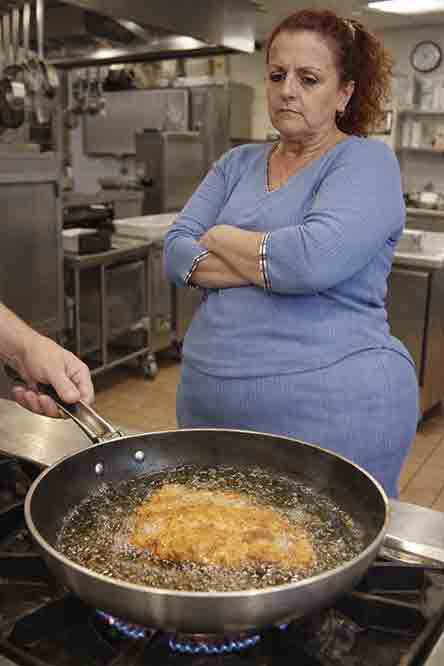
She leaned closer to the pan and pointed with the wooden spoon. “A schnitzel must swim. If it does not swim, it becomes sad."
When the oil heated she held her hand above the pan, listening to the faint shimmer of heat. “Now we are closer,”
she said. “Hot enough that it speaks, but not so hot that it screams.”
When the schnitzel went back in, the oil immediately bubbled around the edges.
Morena’s eyebrows lifted slightly,
which I took as the first sign I had not completely disgraced myself.
“Good. Now do not just stand there like a tourist.”
She grabbed the handle of the pan and gave it a gentle shake.
“Move the pan. Let the fat wash over it.”
She tipped the pan so the oil rolled across the top of the breading.
“This is how the crust souffliert,”
she explained.
“The breading must lift and make little waves.”
Slowly the coating began to ripple and puff instead of lying flat.
Morena nodded with reluctant approval.
“You see? Now it looks like schnitzel and not a breaded shoe.”
When it browned to a light golden color she gestured for me to flip it—once, confidently.
“Not ten times,” she warned.
“If you keep turning it, the poor thing will fall apart.”
A minute later she inspected the finished Schnitzel
, its crust crinkled and airy, and finally uncrossed her arms.
“Hmm,” she said.
“For an American, this is not terrible.
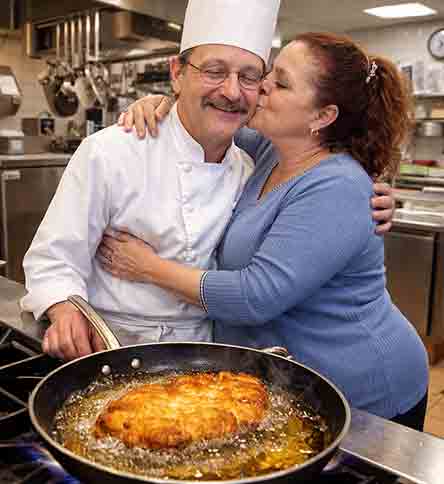
It was so much fun, she knew I reminded her of my grandma
and she liked playing my teacher.
giving "tough love cooking lessons"
When i was getting my feelings hurt she gave me a kiss "You are trying to be German"
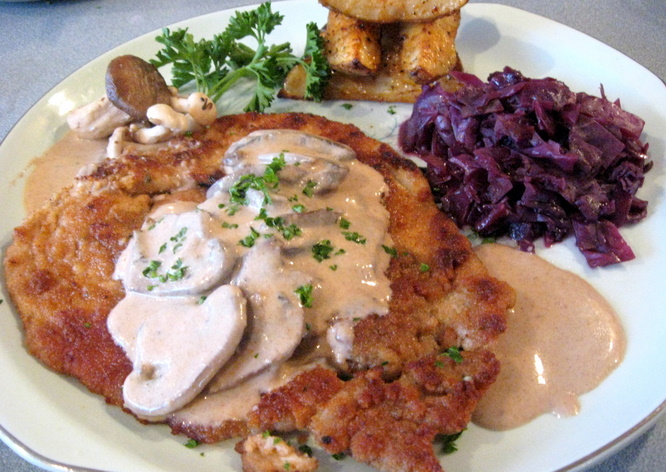
Jaegerschnitzel
(Hunter's Schnitzel)
The Enduring Popularity of Jägerschnitzel Today
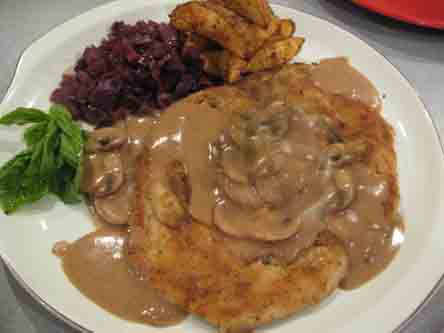
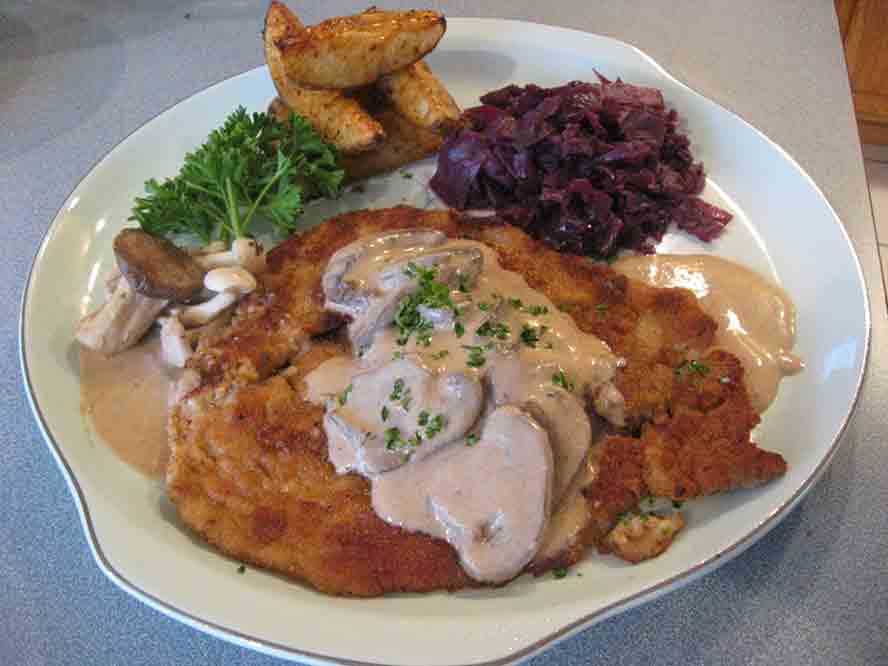
Jägerschnitzel has become one of the most beloved schnitzel variations across Germany, Austria, and German‑American kitchens, and its popularity has only grown in recent decades. What began as a rustic hunter’s dish — a simple cutlet paired with a forest mushroom sauce — has evolved into a comfort‑food icon. Today you’ll find it everywhere: in Gasthäuser, Biergartens, ski lodges, roadside restaurants, and family kitchens. It’s the schnitzel people order when they want something hearty, cozy, and deeply satisfying, especially in the cooler months.
Part of its modern appeal is how adaptable it has become. Some cooks keep the sauce light and earthy with chanterelles or button mushrooms, while others lean into a richer, creamier gravy that feels almost like a Sunday roast. No matter the style, Jägerschnitzel has earned a place as a year‑round favorite — a dish that bridges tradition and comfort, nostalgia and indulgence. It’s the schnitzel that feels like a story: the forest, the hunt, the hearth, and the plate all coming together in one warm, familiar bite.
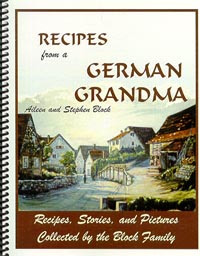
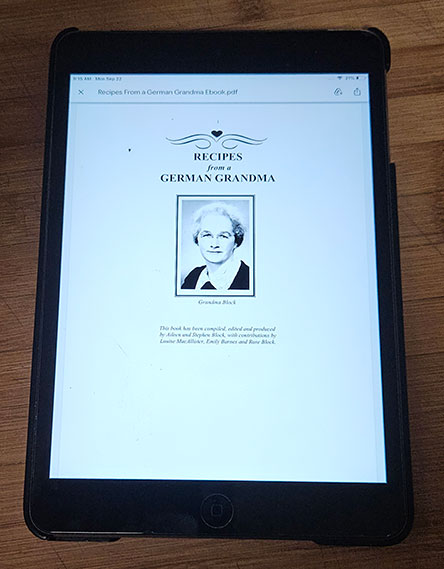
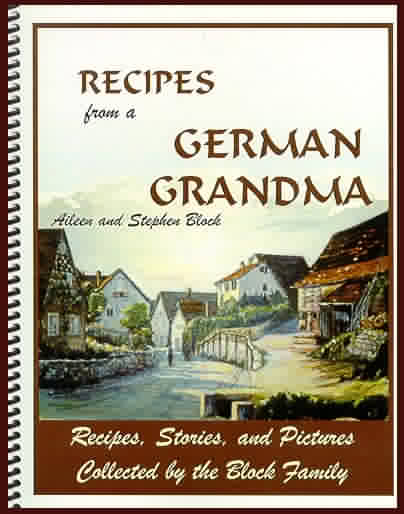
Her recipes, culture and cooking styles that were brought over from Germany. How they evolved when she came to America in the early 1900s and settled in Portland, Oregon on the west coast of the United States. Over 100 recipes
Bonus recipes with step by step color pictures
Online for download
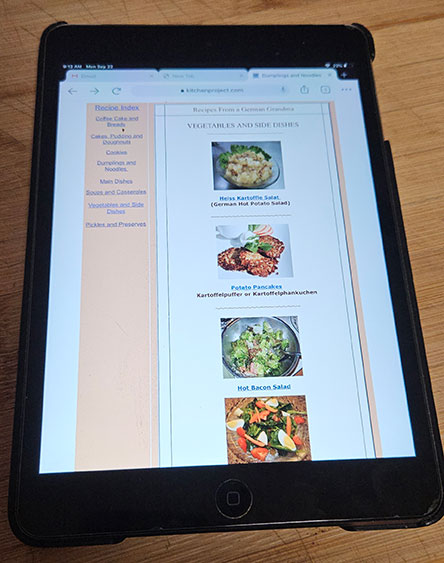
Rest your laptop,tablet or phone
in the Kitchen counter
and follow the recipes with pictures to help.
Bonus
PDF
for you to download
Read on your
phone, tablet or laptop
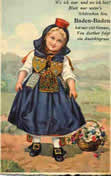
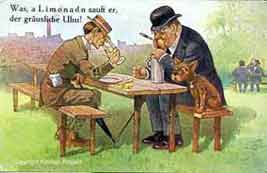
Vintage German Postcard replica's to use as bookmarks or to mail.
From Germany with Love tells the story of my grandma, Emma Block, growing up in a little town in Baden/ Würtemberg, Germany near Heidelberg named Steinsfurt. Then at the age of 15 immigrating to the United States, taking a train with one of her sisters and brothers to Hamburg and sailing the Atlantic with other hope filled Germans wanting to make a life in the "New World". It was not easy but with good values learned in her German upbringing made a full life, had a wonderful family with lots of fun and celebration including the great German meals.
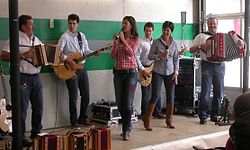
Through modern technology we can enjoy music from Germany at the touch of your computer, there are many venues now, Pandora, Amazon music, and Youtube is free.
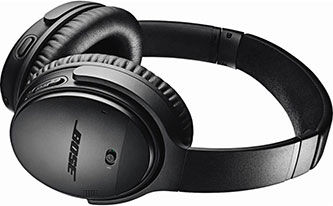
I love my noise canceling headphones that are completely wireless and give incredible sound!